Where did your M-Pesa go? A better way to run a WhatsApp harambee
A payment can reach the right phone and still be missed in the tally. Give your WhatsApp harambee one atpesa page people can share, pay through and follow.

The WhatsApp group is called “Help the team get to Nakuru.” The bus deposit is due on Friday. A parent sends KSh 1,000 to the number pinned in the chat and gets an M-Pesa confirmation. That evening the committee posts its tally, and the parent cannot tell whether the transfer is in it. The treasurer has personal and fundraiser transfers coming into the same account, plus screenshots scattered through the chat. The money may be there. The group still has a question to answer.
Now imagine the same moment at the end of a hospital or funeral collection, when someone asks how much the family actually received. A list of names, a mobile money confirmation and a transfer to the family each tell a different part of the story. A harambee is easier to trust when the organizer can connect those parts.
A payment confirmation answers one question
Safaricom’s Hakikisha lets a sender check the recipient’s name before authorizing a transfer. That matters when you’re typing a number from a group message. If the number belongs to a treasurer, the transaction confirms a payment to that account. The treasurer still has to match it to the right collection, include it in the tally and account for what goes to the beneficiary.
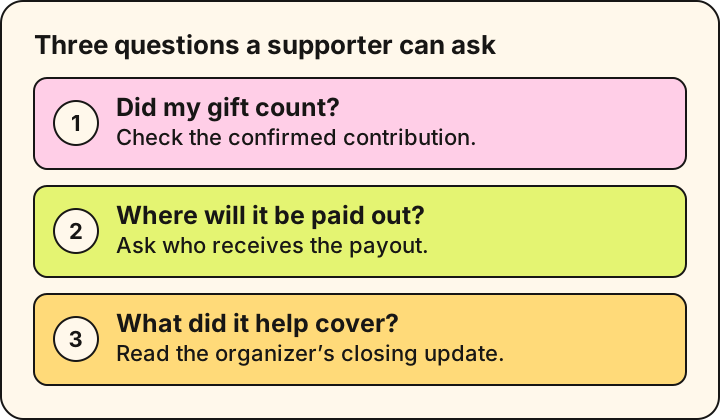
Think about three questions a supporter could reasonably ask. Did my KSh 1,000 count toward this fundraiser? Where is the money set to go? What did the group end up paying for? The first calls for a contribution record, the second for clear payout details, and the third for an update from the organizer. Even a careful treasurer has to do extra work when the answers live in separate inboxes, screenshots and spreadsheets.
Give each contribution a place to land
With atpesa, you can create a page for a specific collection and share it in the WhatsApp group. Put the purpose, the target amount, the deadline and the organizer’s name in the page description. Once the page is ready to accept payments, supporters can open the link and contribute by M-Pesa or card without creating an atpesa account. A confirmed payment made through the page belongs to that fundraiser from the start. The supporter gets a confirmation, and the organizer has a record to work from when updating the group.
Where the beneficiary can set up the page with their own verified M-Pesa payout details, they can receive the eligible proceeds into that account. Someone else can help write the appeal and spread the link while the beneficiary remains the payout recipient. If a committee member owns the page and receives payouts on the group’s behalf, name that arrangement upfront and agree how they’ll account for any onward transfer. The payout follows the verified account set up on the page. Payment confirmation and payout happen separately, so check the current terms and allow time before a deadline.
That distinction matters when you post an update. If people also give by cash or send money to a number separately, record those gifts in the committee’s own tally. If you combine both totals, say what came through the page and what came in separately. When paying a supplier or passing money to a family, tell the group what went out and what it covered. For a sensitive fundraiser, agree with the beneficiary on the details they are comfortable sharing.
A group update can be short. If the team has KSh 24,000 in confirmed contributions and the treasurer has paid a KSh 10,000 deposit, give each figure its own line. Then say what is still due to the bus company and when. Keep the amount contributed and the amount available after deductions distinct. That gives the next person who wants to help a number they can act on.
Let someone help even if they can’t give today
A parent who’s short this week may still know five former players who would help the team get to Nakuru. A colleague might share the page on WhatsApp Status, and a coach might put the same link on a poster as a QR code. Each person can introduce the appeal in their own words. Anyone who opens it can see what it’s for and how to help, even if they never saw the original group message. The recipient’s personal number can stay out of those posts.
Imagine taking that one step further. The committee could give the alumni group, the parents and the poster different links to the same fundraiser. It could then see which link brought in contributions while keeping the same payout destination. That’s a possible extension of the idea. For a first collection, one page and one link are enough to let people help bring in support without handling the money themselves.
Trust is already part of how Kenyans give
FSD Kenya’s Financial Diaries documented families turning to their networks to help meet costs such as hospital care and funerals. Those relationships are part of what makes a harambee work. The person who shares the appeal may know the family, have played for the club, or be the colleague who can tell you why the request matters.
In a 2018 analysis of M-Changa campaigns, Busara and M-Changa found that verification and having a separate treasurer were associated with a better chance of reaching a goal. That was an association in that platform’s data. It also suggests a useful way to think about a treasurer. A trusted person can give the collection credibility, and a contribution record can give that person something clear to show the group. M-Changa’s published figures put the scale in perspective. It reports more than KSh 309 million raised across over 1,500 funeral fundraisers on its platform.
What to put in your first WhatsApp message
Start with an expense the group can picture. If the team needs KSh 30,000 for transport, tell people when the bus must be booked, who is organizing the collection and where to look for an update. Here’s how a committee could introduce an atpesa page.
We’re raising KSh 30,000 to get the team to Nakuru. The bus deposit is due on Friday. You can chip in by M-Pesa or card through our atpesa page. If you know a former player who’d like to help, please forward the link. We’ll update the group once we’ve paid the bus deposit.
The closing message matters as much as the opening one. “We paid the bus deposit on Friday. Here’s what came in, what went to the bus company and what’s still needed for the balance” gives contributors a clear account of what their money helped do. If the plan changes or the group raises more than it needs, explain how the committee and the beneficiary will handle the balance.
If you have a harambee coming up, create an atpesa support page before you post the collection details. Set up the payout destination, open the page on your phone and read it as someone receiving the appeal secondhand. Can they tell who it’s for, why it matters and what happens after they chip in? Give them that answer before they have to ask.